
任仕製作工作室|設計行為的現場
Studio of Design Practice 透天 Taichung , Taiwan
Size 10 坪
Year 2024
Photography 脖子影像工作室
工作室位於台中大里,鄰近菩薩寺,座落在一排連續的騎樓街廓之中。原空間是舊透天的一樓,尺度狹長,採光僅來自單一方向。在外觀處理上,我們選擇保留基地原有的騎樓語彙,並以僅 1.5mm 厚度的沖孔鋁板作為外框,捨去繁複的打版與底座結構,以螺牙與螺帽固定,使板材自然形成彎折的曲面。這樣的設計選擇源於對城市脈絡的尊重,透過立面的處理,使工作室能以謙遜美學的姿態與既有街景共存。
The studio is located in Dali, Taichung, near Pusa Temple, set along a row of continuous arcaded streets. The original space, a ground floor of an old townhouse, features a narrow depth with daylight entering from only one direction. For the façade, we chose to retain the existing arcade language of the site and introduced a 1.5 mm perforated aluminum panel as the external frame. By omitting complex bending and base structures and securing the panel with threaded screws and nuts, the material naturally forms a soft curved surface. This approach reflects our respect for the surrounding urban context and, through the treatment of the façade, allows the studio to coexist with the streetscape in a manner aligned with a modest design aesthetic.

任仕製作工作室|設計行為的現場
Studio of Design Practice
透天 Taichung , Taiwan
Size 10 坪
Year 2024
Photography 脖子影像工作室
工作室位於台中大里,鄰近菩薩寺,座落在一排連續的騎樓街廓之中。原空間是舊透天的一樓,尺度狹長,採光僅來自單一方向。在外觀處理上,我們選擇保留基地原有的騎樓語彙,並以僅 1.5mm 厚度的沖孔鋁板作為外框,捨去繁複的打版與底座結構,以螺牙與螺帽固定,使板材自然形成彎折的曲面。這樣的設計選擇源於對城市脈絡的尊重,透過立面的處理,使工作室能以謙遜美學的姿態與既有街景共存。
The studio is located in Dali, Taichung, near Pusa Temple, set along a row of continuous arcaded streets. The original space, a ground floor of an old townhouse, features a narrow depth with daylight entering from only one direction. For the façade, we chose to retain the existing arcade language of the site and introduced a 1.5 mm perforated aluminum panel as the external frame. By omitting complex bending and base structures and securing the panel with threaded screws and nuts, the material naturally forms a soft curved surface. This approach reflects our respect for the surrounding urban context and, through the treatment of the façade, allows the studio to coexist with the streetscape in a manner aligned with a modest design aesthetic.


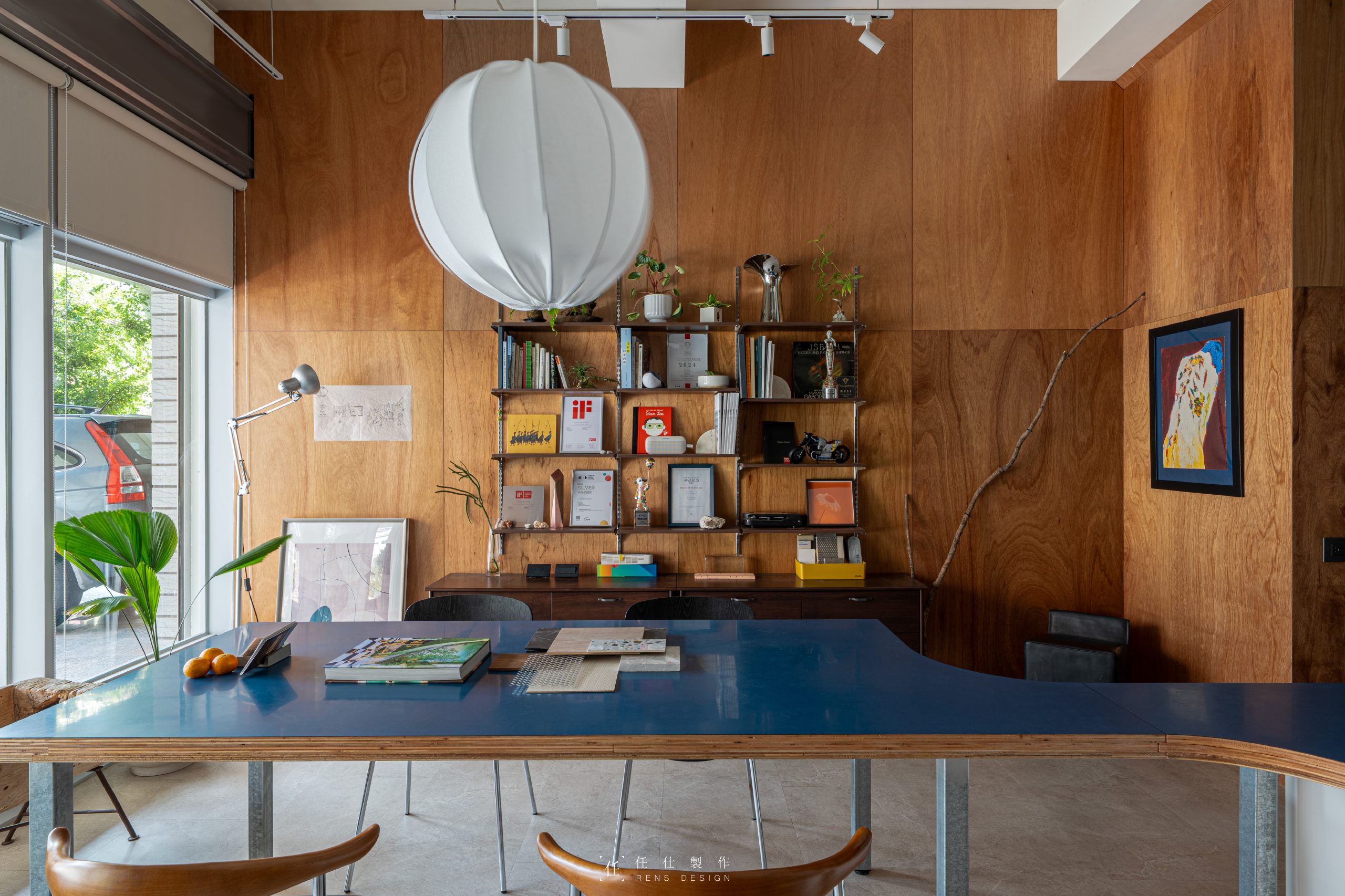
特製弧形長桌是工作室的核心元素,用以重新整理空間的機能與動線。長桌前方主要作為接待、會議與展示使用;後方則整合工作區、材料區與軟裝展示區,使不同用途的區域在視覺與行為上清楚分層。在平面規劃中,我們以弧形長桌劃分動線,使內部工作動線與對外接待動線得以整合,讓有限的空間發揮最大效益。長桌被視為空間的主要構成,不僅是界面分區,同時承擔展示與行為連結的功能。弧形形式在狹長的空間中建立清楚的方向性,自然串聯前後兩個使用區域,使行動與視線都能順暢流動。此外,弧形長桌的軸線延伸至後方高牆,牆面以特殊塗料處理,形成穩定的背景面。此高牆重新收整原本過度通透的空間,整合收納並強化立面的完整度,使空間在功能性與開放性之間取得更平衡的狀態。
The custom curved table is the core element of the studio. It reorganizes how the space works and how people move through it. The front side is used for reception, meetings, and display, while the back side brings together the work area, material zone, and soft furnishing display. This creates a clear separation between public and work functions within a compact footprint. The table acts as both a divider and a shared surface for working and presenting. Its curved form guides movement naturally through the long, narrow space and connects the front and back areas in a continuous flow. Its central axis leads directly to the feature wall behind it, finished with a mineral-based coating. This wall restores clarity to the originally over-open space, integrates storage, and strengthens the overall visual structure, creating a balanced relationship between openness and function.


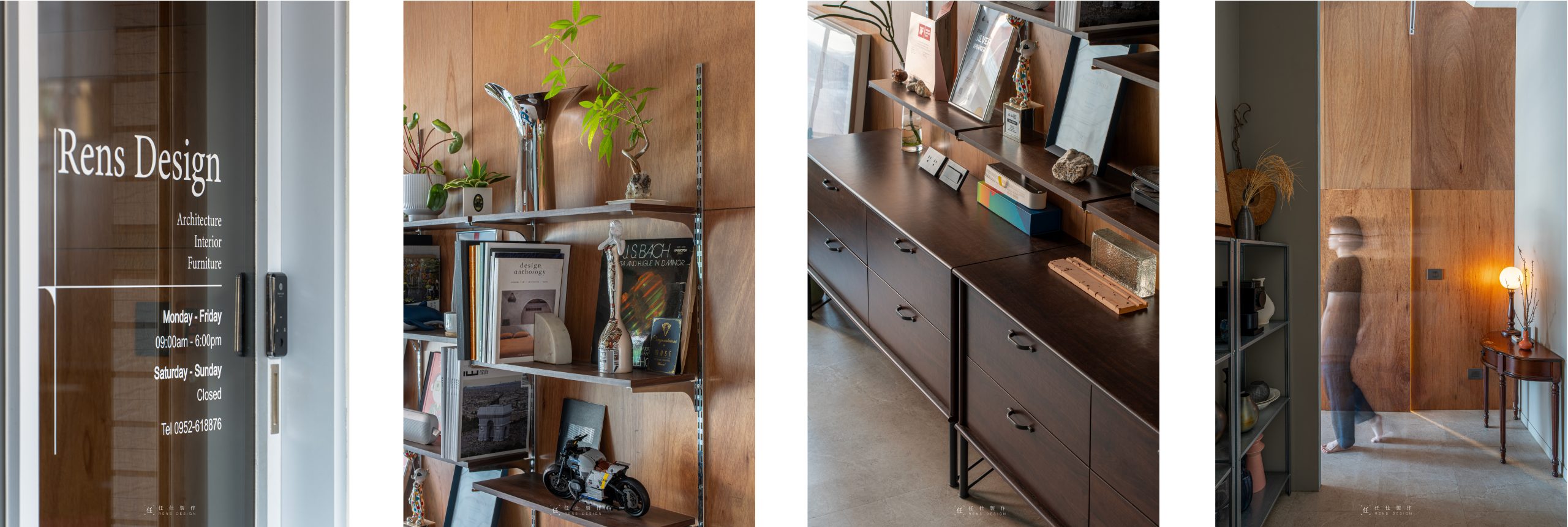
特製弧形長桌是工作室的核心元素,用以重新整理空間的機能與動線。
長桌前方主要作為接待、會議與展示使用;後方則整合工作區、材料區與軟裝展示區,使不同用途的區域在視覺與行為上清楚分層。在平面規劃中,我們以弧形長桌劃分動線,使內部工作動線與對外接待動線得以整合,讓有限的空間發揮最大效益。
長桌被視為空間的主要構成,不僅是界面分區,同時承擔展示與行為連結的功能。弧形形式在狹長的空間中建立清楚的方向性,自然串聯前後兩個使用區域,使行動與視線都能順暢流動。
此外,弧形長桌的軸線延伸至後方高牆,牆面以特殊塗料處理,形成穩定的背景面。此高牆重新收整原本過度通透的空間,整合收納並強化立面的完整度,使空間在功能性與開放性之間取得更平衡的狀態。
The custom curved long table serves as the central element of the studio, reorganizing both the spatial functions and circulation. The area in front of the table accommodates reception, meetings, and display, while the rear integrates the work zone, material area, and soft furnishing display, creating clear visual and functional separation between the different uses. In the floor plan, the curved table defines circulation, merging the internal workflow with the client reception path, allowing the compact space to operate with maximum efficiency.
The table is considered the primary spatial component, functioning not only as a zoning device but also as a surface for display and interaction. Its curved form establishes a clear directional flow within the elongated plan and naturally connects the front and rear zones, enabling movement and sightlines to transition smoothly.
The axis of the curved table extends toward the rear feature wall, which is finished with a mineral-based coating to form a stable backdrop. This wall reorganizes the previously over-open condition, consolidates storage, and reinforces the clarity of the vertical surface, creating a more balanced relationship between functionality and openness within the space.


